


Legacy software systems are the backbone of many organizations, powering vital business processes. However, their outdated frameworks and limited scalability can hinder growth and leave companies vulnerable to security risks. Modernizing these software systems is necessary, but how do you upgrade without interrupting business operations? For CTOs and VPs of Engineering, this challenge is as much strategic as it is technical.
The key lies in planning and executing a clear, phased approach that minimizes risks and reduces downtime. At Dev Teams On Demand (DTOD), we've helped countless organizations transform their legacy software systems while maintaining operational continuity. Here's how you can do the same.
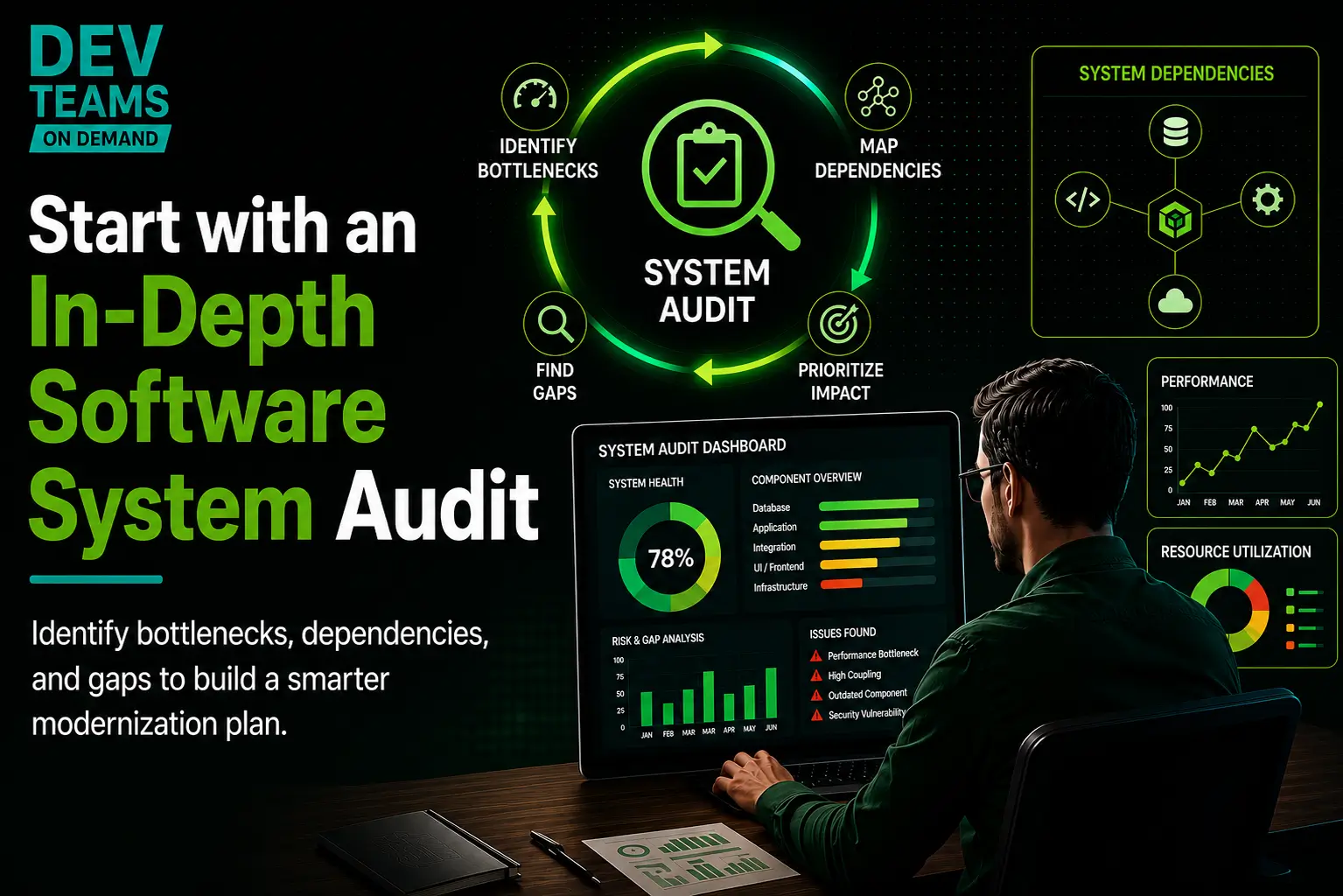
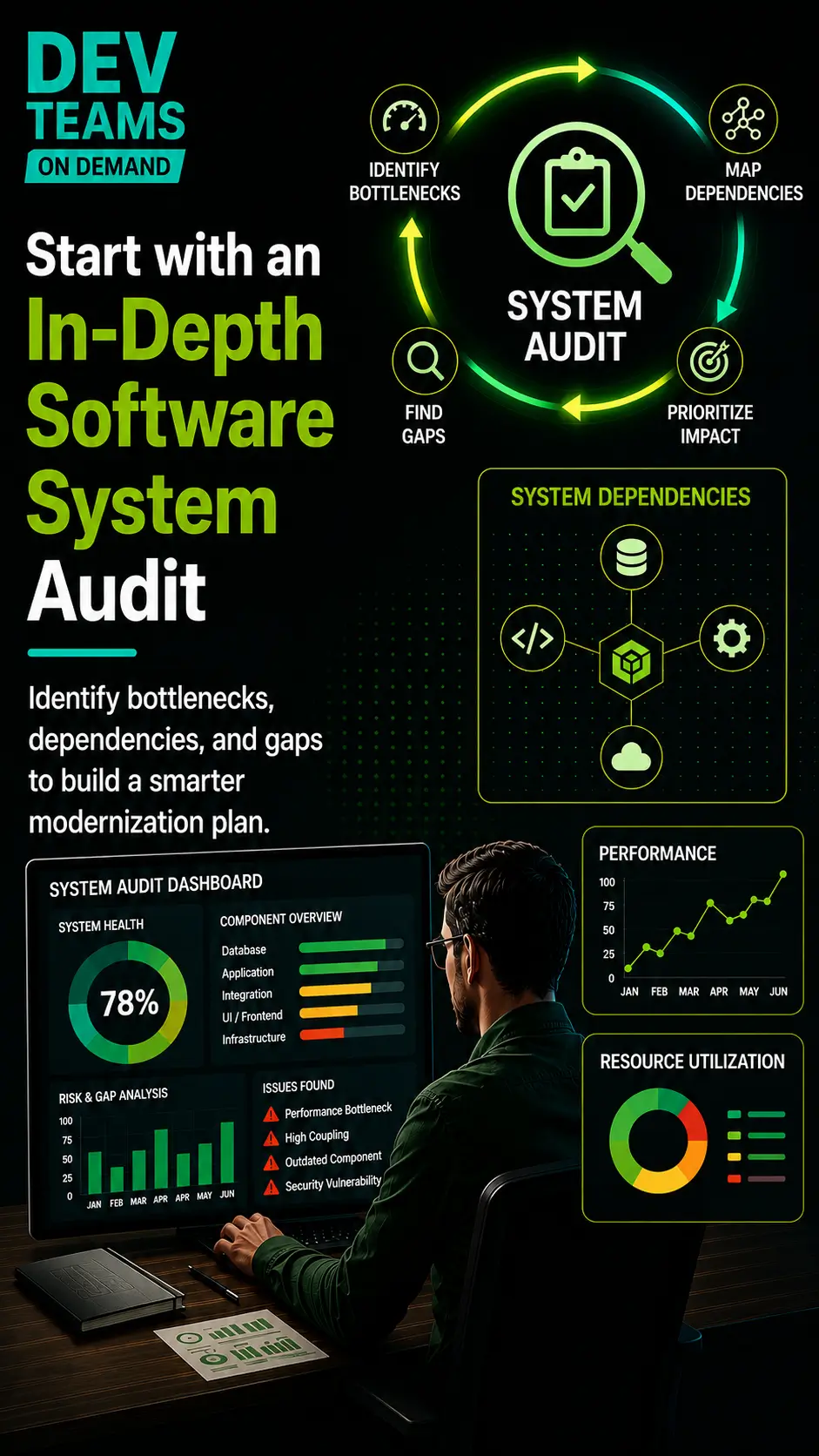
Start with an In-Depth Software System Audit
Before you touch a single line of code, conduct an extensive audit of your existing software applications. The goal here is to identify bottlenecks, dependencies, and gaps that modernization will address. Map out critical workflows and prioritize software components that have the most business impact.
For example, we recently worked with a mid-market logistics company struggling with a monolithic application that couldn’t handle peak-season traffic. Through an audit, we pinpointed inefficiencies in the database design as well as key functions that required rewriting. Our engineering team segmented the project into manageable phases, ensuring the client experienced zero service interruptions during modernization.
When conducting an audit, it’s important to involve both developers and business stakeholders. This ensures both technical pain points and business-critical processes are factored into your plan.
Adopt a Phased Migration Strategy
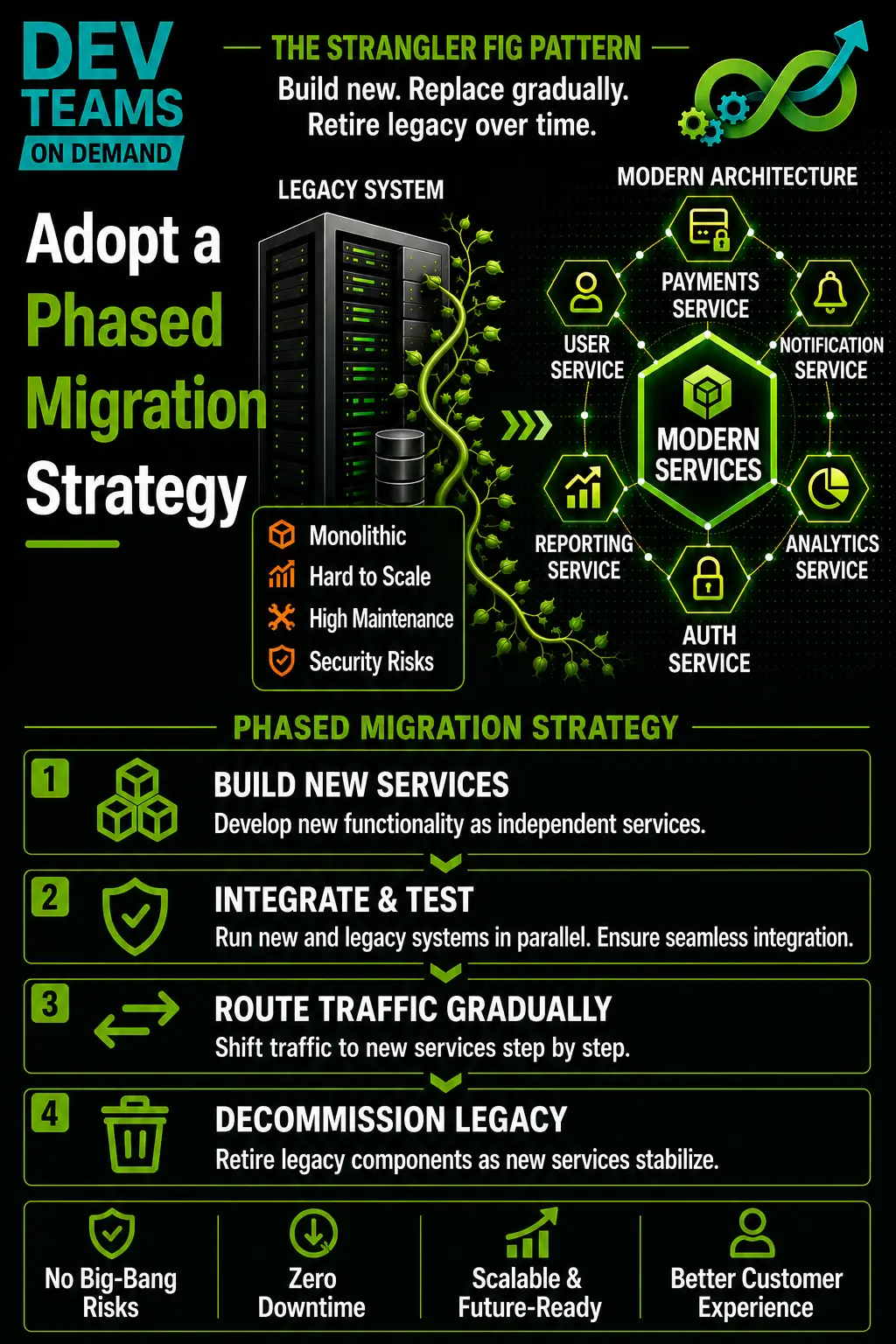
One of the biggest mistakes organizations make is attempting to overhaul their entire system in one fell swoop. Instead, break the project into smaller phases and tackle high-priority areas first.
A popular phased approach is the "strangler fig pattern". Introduced by Martin Fowler, this method involves building new functionality as independent services while incrementally decommissioning parts of the legacy system. Over time, the legacy system becomes obsolete without ever requiring a full shutdown.
For instance, during a recent project with a fintech startup, we used the strangler fig pattern to replace outdated payment processing modules with modern, secure APIs. The transition was seamless because we deployed and tested the new system in parallel with the legacy one. This allowed the client's customers to continue transacting without disruptions.

Leverage Staff Augmentation for Specialized Expertise
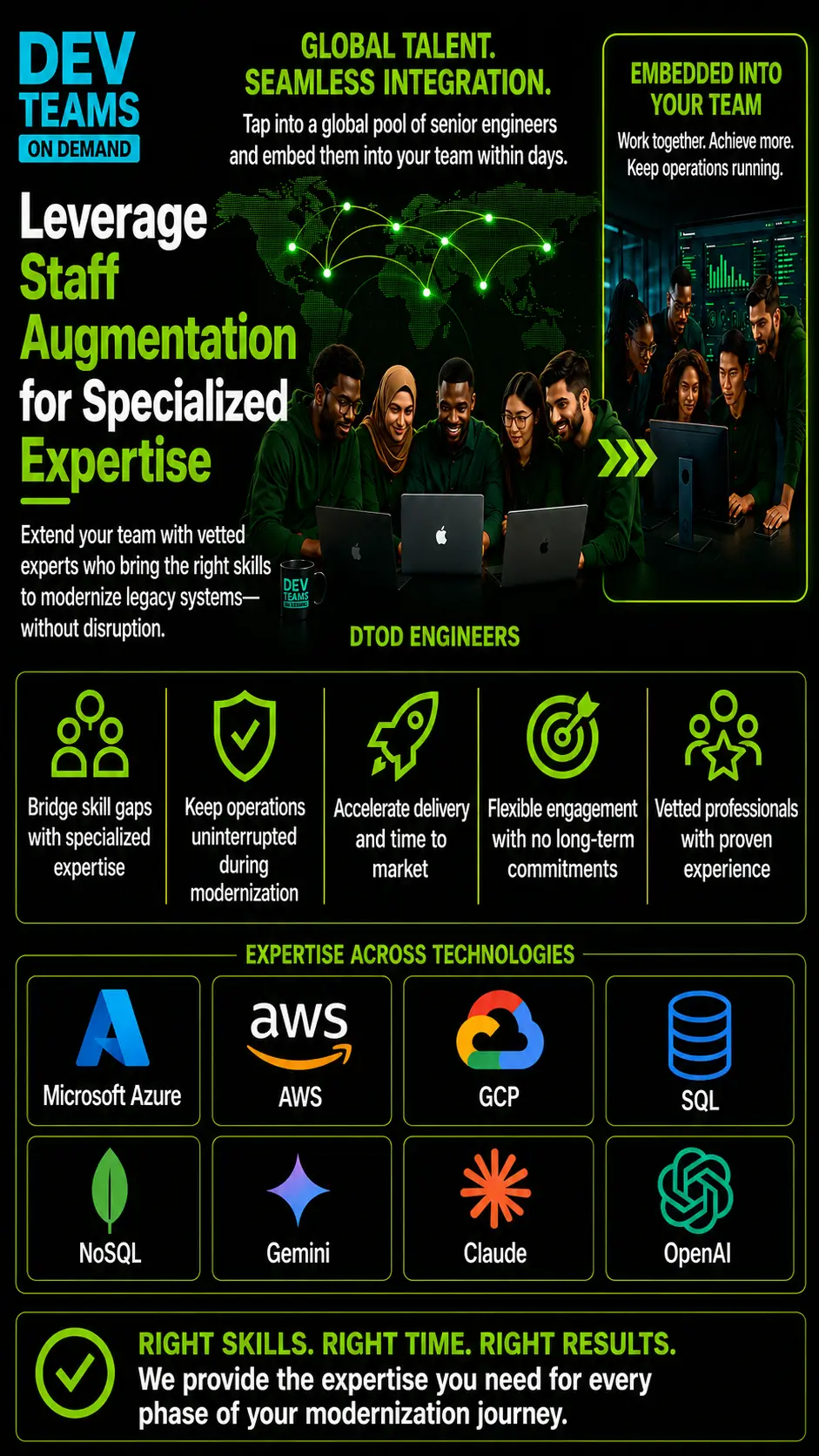
Modernizing legacy systems often demands niche expertise, such as migrating from an SQL-based architecture to NoSQL databases or transitioning monolithic applications into microservices. Staff augmentation bridges this gap by bringing in expert engineers specifically for the modernization effort, ensuring your existing team can stay focused on keeping business operations uninterrupted.
By leveraging staff augmentation, you can tap into a global pool of senior engineers with deep experience in legacy modernization without long-term commitments. At DTOD, we embed vetted engineers directly into client teams, often within just a few days. Our talent includes developers with expertise across platforms like Microsoft Azure, AWS, GCP, as well as AI integration specialists working with OpenAI, Claude, and Gemini. This flexible model ensures you have the right skills for each phase of the project.

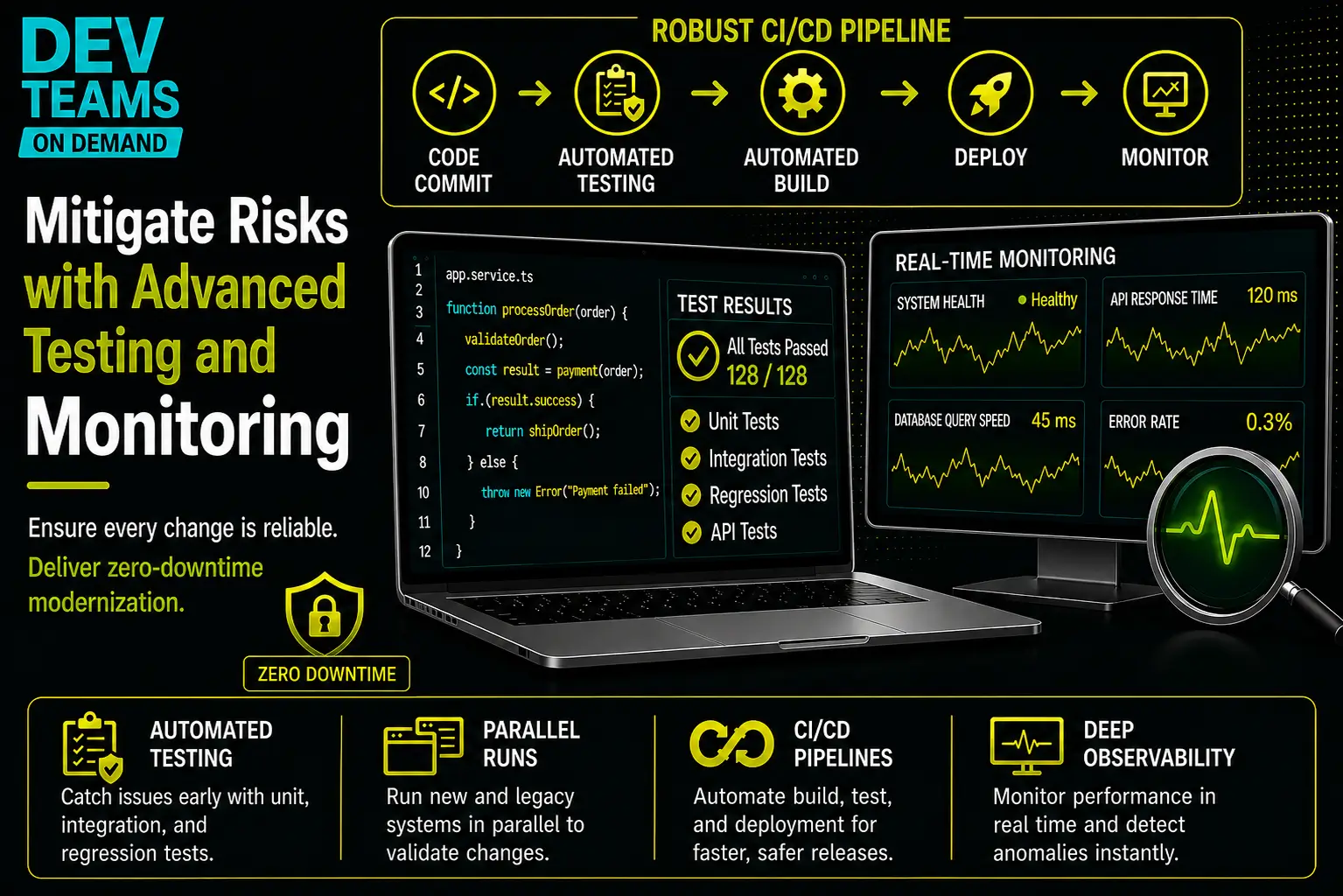
Mitigate Risks with Advanced Testing and Monitoring
Testing isn’t optional when modernizing systems; it's critical. Every increment needs thorough quality assurance to ensure it functions seamlessly alongside existing systems.
To achieve zero-downtime, legacy software modernization requires robust CI/CD pipelines and deep observability. Automated regression testing ensures new code doesn't break existing workflows, while running the updated system in parallel with the live one lets you validate changes against real usage before fully cutting over.
As we experienced during a project for an e-commerce company, automated testing tools reduced error rates by 65% while transitioning their inventory management system to a cloud-based architecture. Businesses should also prioritize monitoring performance metrics such as database query speeds and API response times to quickly address any anomalies.

Conclusion
Transforming legacy software systems is a complex but necessary step for businesses aiming to remain competitive. By starting with a software system audit, adopting a phased approach, integrating expert talent through staff augmentation, and proactively managing risks, you can modernize without disrupting your operations.
At Dev Teams On Demand, we specialize in helping companies transition to modern architectures while they continue serving their customers. From initial discovery and assessment through to full execution, our structured engagement model ensures your modernization succeeds without surprises. Let us help you stop searching and start building. Get in touch with us today.
