
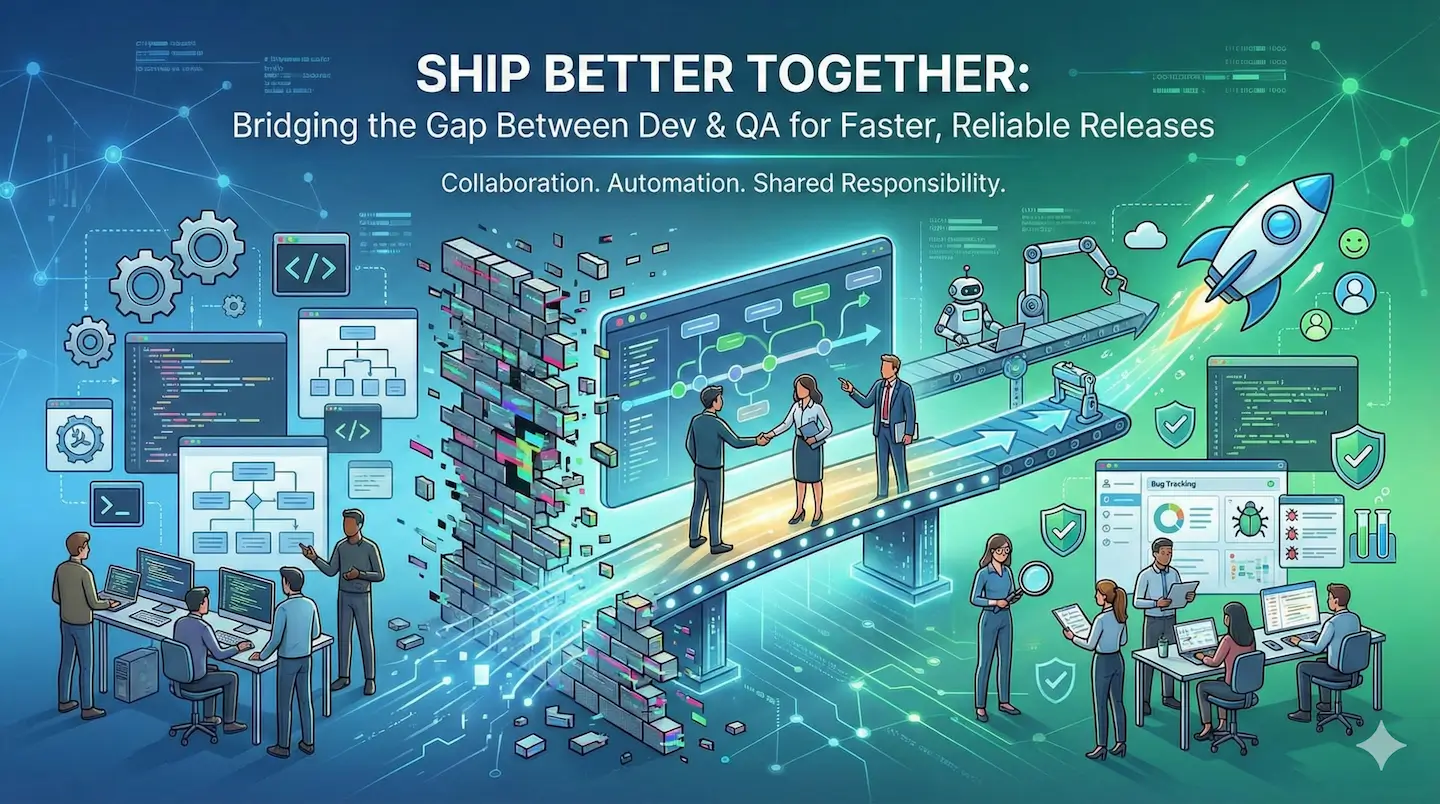

Every founder knows the cost of a missed deadline, but few quantify the true burn rate of the Dev vs. QA wall. That wall (the one where features are “thrown over” and bugs are “thrown back”) isn’t just a communication breakdown. It’s a catastrophic drain on engineering capital. It doesn’t just slow you down; it weaponizes technical debt and makes you un-scalable. In the startup world, you are either scaling or dying. To ship reliable code at speed, you can’t afford a single silo.
Make Your Requirements Bug-Proof (The 3 Amigos Playbook)
If QA only sees a feature when it is "done," it is already too late. A major cause of bugs is that Developers and QA have different understandings of what needs to be built.
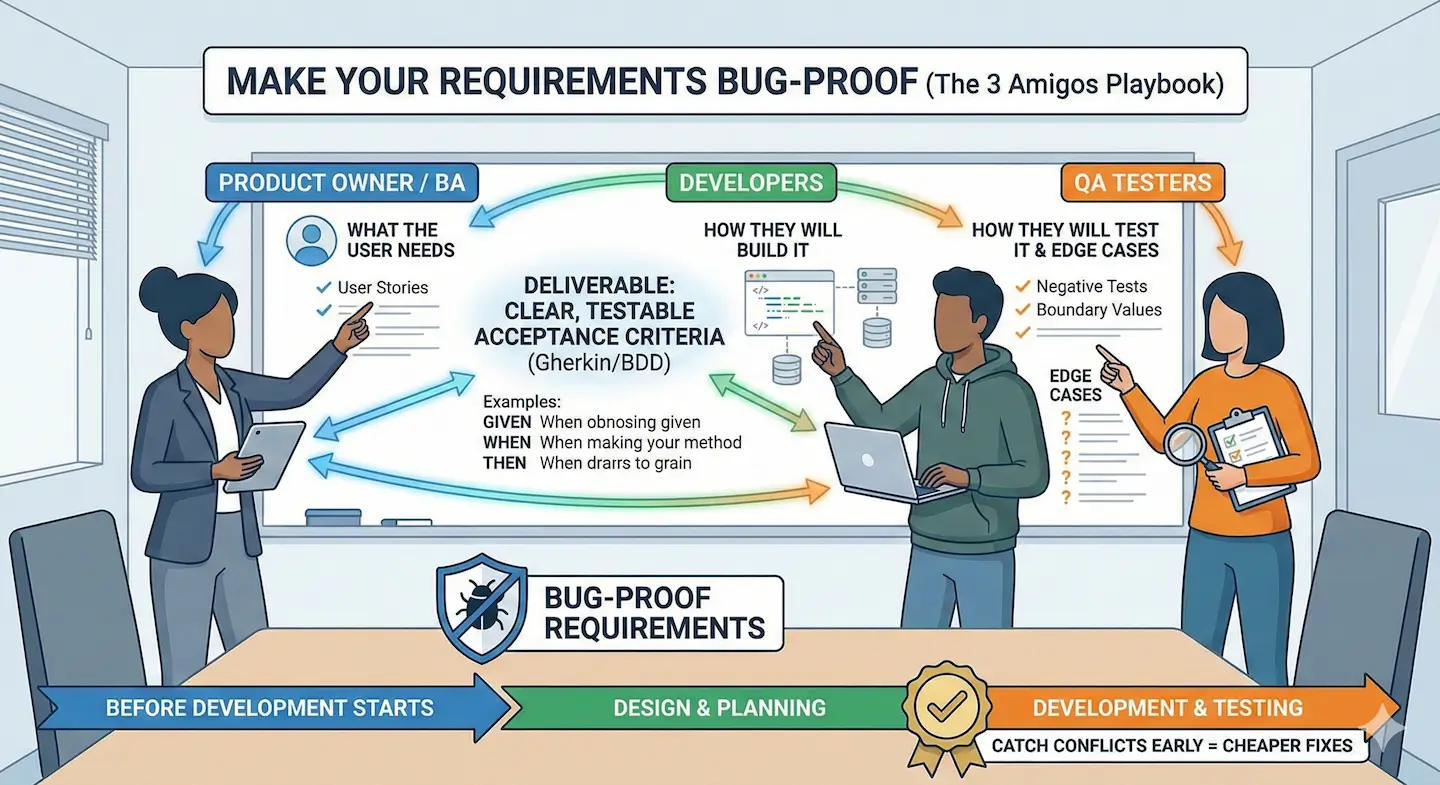
To fix this, use the "Three Amigos" approach. This is a meeting that happens before development starts. This meeting's deliverable is clear, testable acceptance criteria (Gherkin/BDD is great) and a quantified list of edge cases, not just a conversation. This meeting brings together three key voices:
- The Business Analyst/Product Owner: Explains what the user needs.
- The Developers: Explains how they will build it.
- The QA Testers: Explains how they will test it and identifies edge cases immediately.
By involving QA in design and planning, you catch conflicting requirements early, which is much cheaper than fixing buggy code later.
The Knowledge Arbitrage: Close the Context Gap to Accelerate Testing
A common frustration is the "knowledge gap." Developers know how the code functions, but they often don't explain the context to the testers.
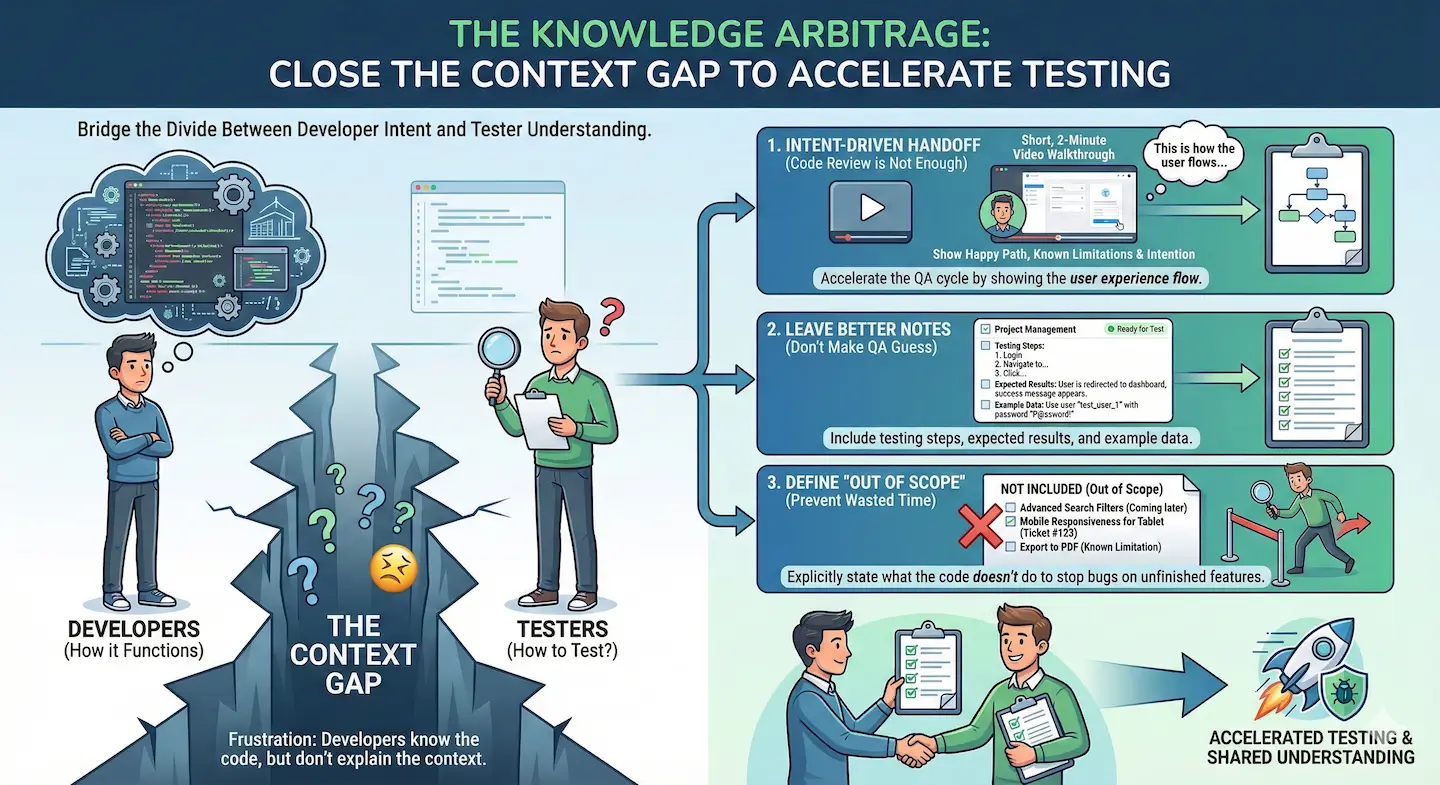
- Code Review is Not Enough: The Intent-Driven Handoff.: Developers should record short, 2-minute video walkthroughs of the feature's happy path and known limitations to accelerate the QA cycle. This isn't just about code; it’s about showing the "intention" of the work and how the user experience flows.
- Leave better notes: Don't make QA play a guessing game. When moving a ticket to "Ready for Test," Developers should include notes on testing steps, expected results, and even example data.
- Define "Out of Scope": Explicitly stating what the code doesn't do prevents QA from wasting time reporting bugs on unfinished features or known limitations.
Production-Ready Staging: Kill the Environment Excuse and Unlock Trust
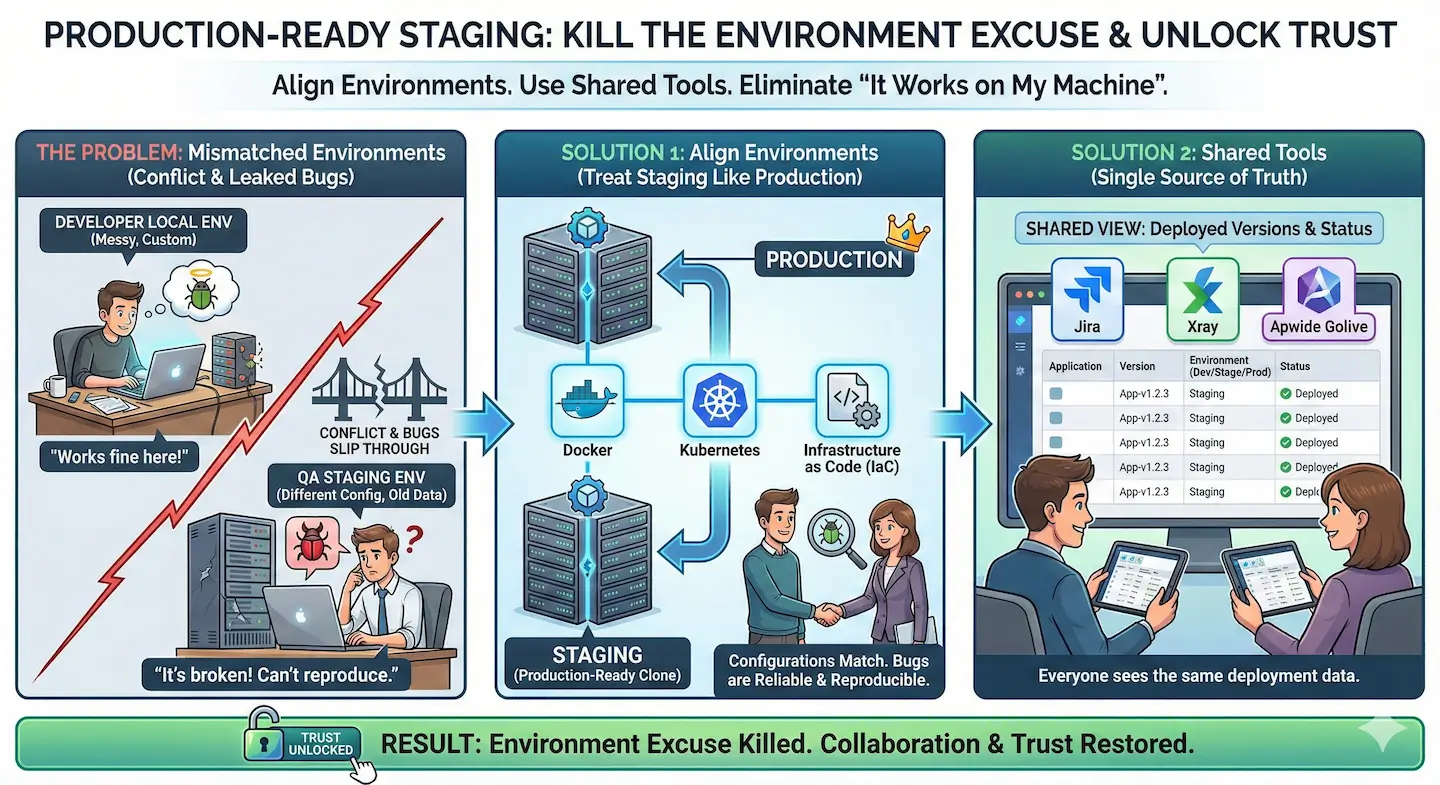
Conflict often arises not because the code is bad, but because the environments are different. If a Developer works in a local environment while QA tests in Staging, bugs will inevitably slip through.
- Align your environments: Treat your staging environment like production. Focus on tools that enable this: Docker, Kubernetes, and Infrastructure as Code (IaC). If the configurations match, the bugs can be reproduced and fixed reliably.
Use shared tools: Everyone should look at the same "source of truth." Whether it is Jira, Xray, or Apwide Golive, both teams need a single view of what versions are deployed where.
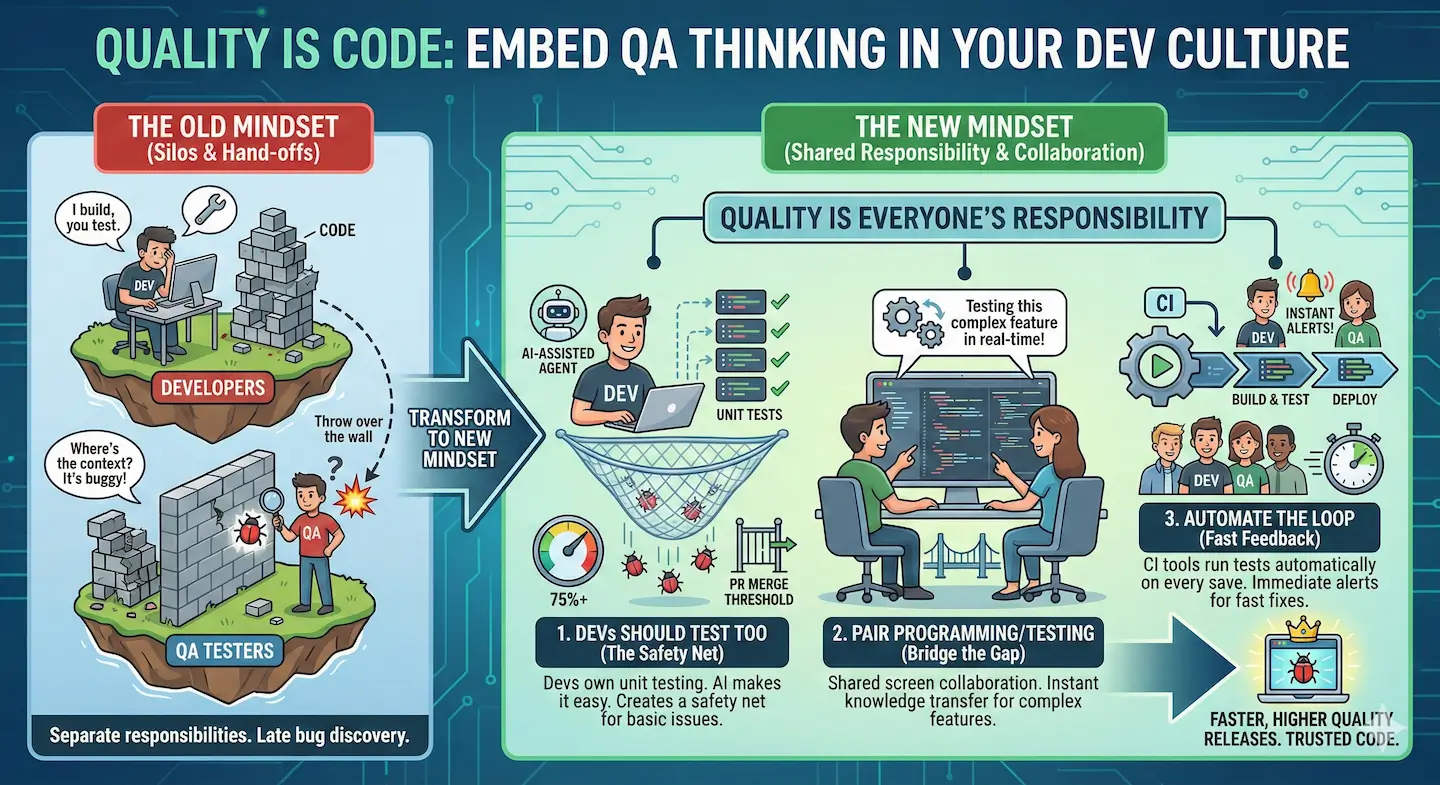
Quality is Code: Embed QA Thinking in Your Dev Culture
The old mindset was that Developers build and QA tests. The new mindset is that quality is everyone's responsibility.
- Devs should test too: Developers should take ownership of unit testing. With the rise of AI-assisted agents, writing unit tests has never been easier. There is little excuse for a codebase to be missing unit tests these days.. Having unit tests in place creates a floor level "safety net" that catches basic issues early. Require a minimum threshold of unit test coverage (75%) before a PR is even considered for merging.
- Pair Programming/Testing: Sometimes, a Developer and a QA Engineer should sit together (or share a screen) to test a complex feature in real-time. This helps bridge the knowledge gap instantly.
Automate the loop: Use Continuous Integration (CI) tools to run tests automatically every time code is saved. If a build fails, both Dev and QA should be alerted immediately so they can fix it fast.
Post-Mortems Over Personal Attacks: The Only Way to Learn Fast
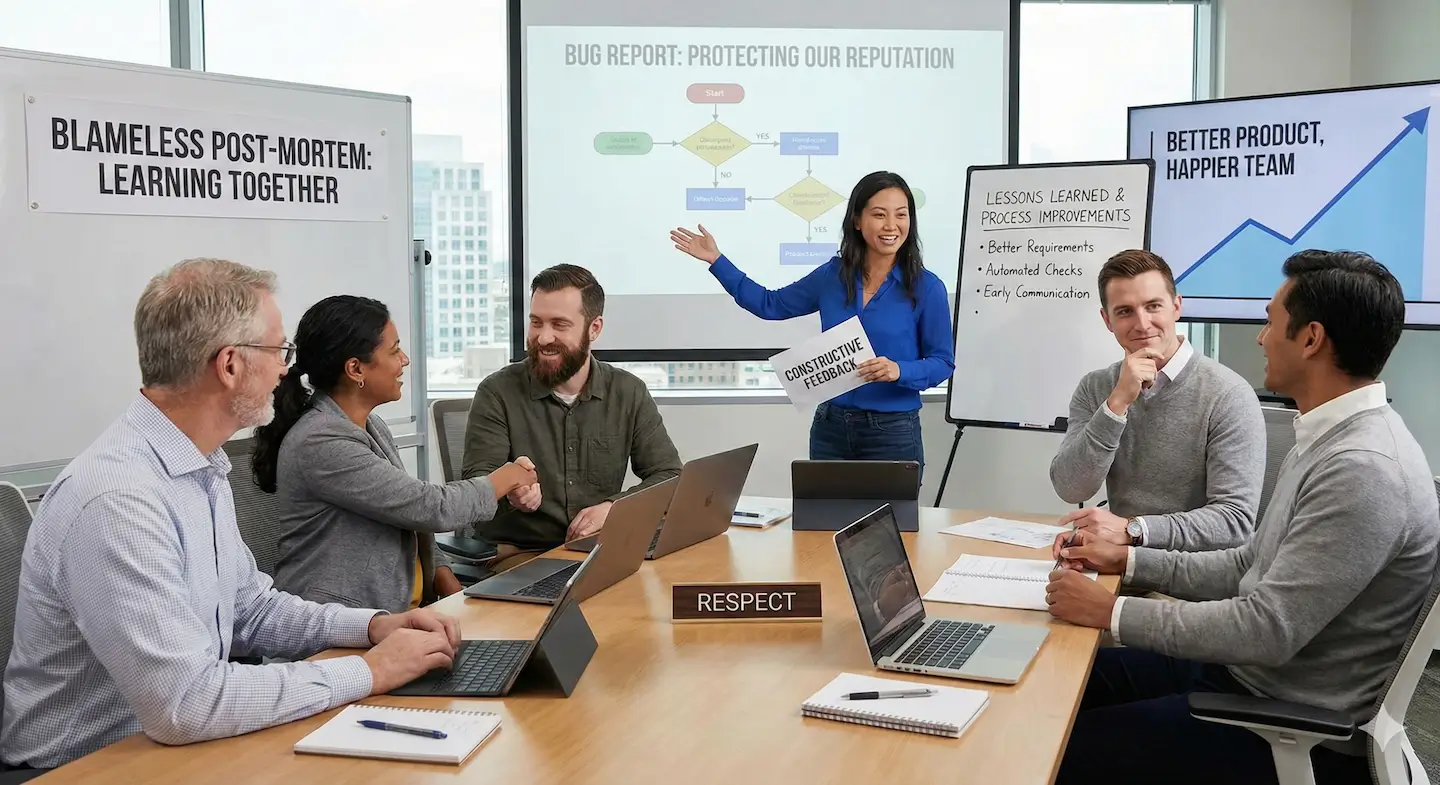
Finally, the most critical tool is mutual respect.
Developers need to remember that a bug report is not a personal attack; it is a way to protect the team's reputation. Conversely, QA should offer constructive feedback that helps improve future planning, rather than just pointing out failures.
When you strip away the silos and build a culture of trust, you do not just get fewer bugs. You get a happier team and a better product.
Conclusion: The Cost of Waiting
The wall between Development and QA is more than an inconvenience, it’s an unnecessary tax on your growth, a liability in a due diligence audit, and a system that guarantees technical debt will outpace your funding.
Shipping better code faster isn't a team-building exercise; it is the most critical feature of a scalable engineering organization. By implementing the "Three Amigos" approach, mandating production-ready staging, and making quality a shared mandate, you shift your culture from one of blame to one of ownership. You stop fighting fires and start engineering a faster, more reliable product velocity.
When you strip away the silos and build a culture of trust, you don’t just get fewer bugs. You unlock true engineering scalability.
Stop engineering bottlenecks from costing you your next funding round.
